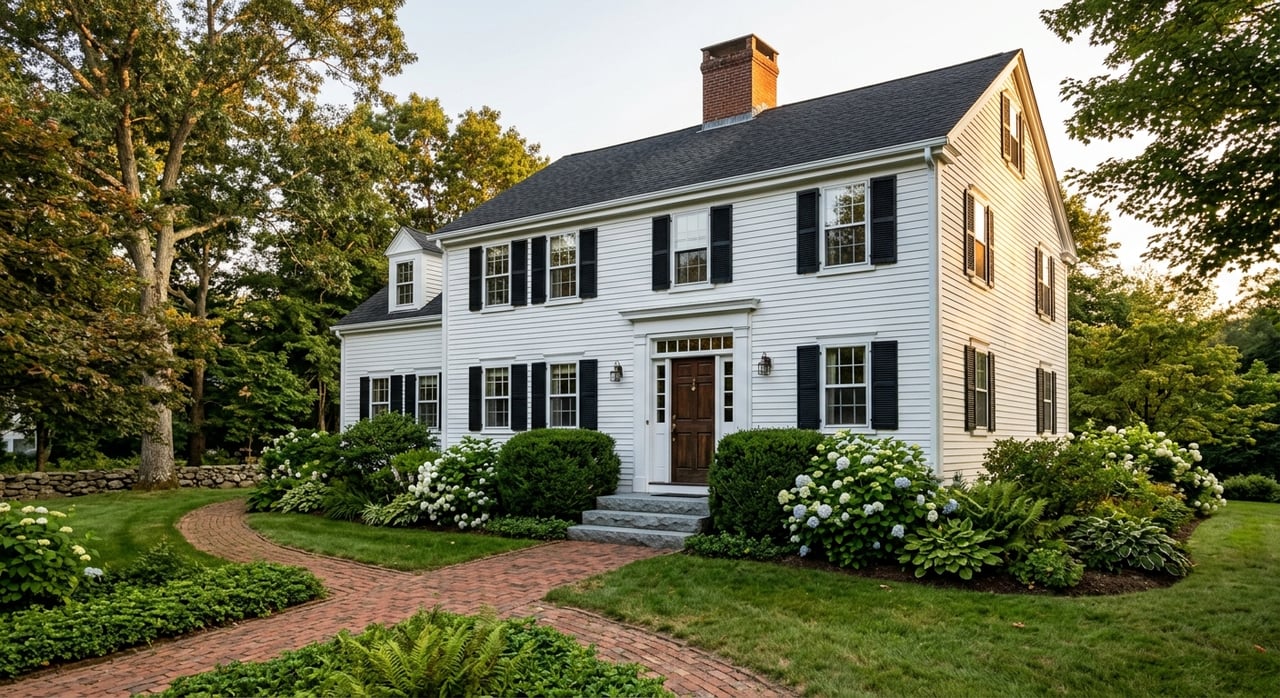
Choosing between Sharon and Westwood is not just about price. It is about how you want your days to feel, how you want to commute, and what kind of home setting fits your next chapter. If you are weighing both suburbs, this guide will help you compare housing, lifestyle, transit, and long-term fit so you can move forward with more clarity. Let’s dive in.
Westwood vs Sharon at a Glance
Westwood and Sharon are both established Norfolk County suburbs with high owner-occupancy and a strong single-family home presence. Still, they feel different in everyday life.
Westwood is smaller and more compact, with 16,533 residents across 10.88 square miles. Sharon is larger geographically, with 18,762 residents across 23.44 square miles, which gives it a more spread-out feel. Census data also shows Westwood is denser, at 1,494.9 people per square mile compared with Sharon’s 792.6.
For many buyers, that difference shapes the entire experience of living there. Westwood tends to feel more connected to retail, commuter infrastructure, and mixed-use areas, while Sharon tends to feel more land-rich and open-space oriented.
Home Prices and Housing Style
If budget is a major part of your decision, Westwood and Sharon sit at different price points. Census estimates put the median owner-occupied home value at $1,041,500 in Westwood and $737,100 in Sharon.
That does not mean one town is better than the other. It means you may find that Westwood asks for a higher entry point in exchange for a more compact setting, shorter average commute times, and stronger transit-oriented development patterns.
Westwood housing character
Westwood’s planning documents describe an established suburb with predominantly single-family homes on moderately sized lots. The town reports that 78.4% of its housing stock is single-family, with a meaningful number of dwellings in multi-unit structures.
The same plan notes limited vacant developable land and a housing pattern shaped in part by replacement activity. Since 2000, 353 single-family homes were built, and 56% of single-family permits from 2007 to 2018 were teardowns. In practical terms, that means some of Westwood’s housing change comes from older homes being replaced rather than large-scale new subdivision growth.
Sharon housing character
Sharon also remains heavily centered on detached homes. Town housing documents say 91.9% of the housing stock was single-family as of January 1, 2010, while later planning materials describe about 85% of housing units as single-family.
Sharon has added some multifamily, senior-oriented, and affordable units over time, but detached housing still defines most of the market. For buyers who picture a more traditional suburban layout, that may feel familiar and appealing.
How Infrastructure Shapes Each Town
One of the biggest differences between Sharon and Westwood is not always visible at first glance. It is infrastructure.
Sharon’s housing plan states that the town has no public sewer system, and significant areas fall within water-resource protection districts. Those factors limit higher-density housing and help preserve a lower-rise residential pattern.
Westwood, by contrast, is served by the Dedham Westwood Water District and MWRA sewer services. That utility framework helps explain why Westwood has been able to support more multifamily and mixed-use housing near transit and commercial areas.
For you as a buyer, this matters because infrastructure often shapes the pace and pattern of future housing development. Westwood appears better positioned for concentrated growth near key nodes, while Sharon is more constrained by land-use and utility conditions.
Commute and Transit Access
If your week revolves around commuting, this may be the section that decides it for you. Westwood offers a shorter average commute time, at 30.2 minutes compared with 38.6 minutes in Sharon, according to Census data.
Westwood sits at the junction of Routes 95/128 and 93, has access to two commuter rail lines, and includes MBTA bus service on Routes 1 and 1A. The town also highlights University Station near the Route 128 train station, with 2.3 million square feet of retail, office, and residential uses.
Sharon is about 22 miles south of Boston and almost midway between Boston and Providence. The town notes that MBTA commuter trains stop at Sharon station, and Amtrak service is available nearby at Route 128 station.
What that means in daily life
Westwood tends to feel more integrated into the Route 128 and I-93 corridor. If you want multiple ways to move around, whether by rail, highway, or nearby retail hubs, Westwood may feel more convenient day to day.
Sharon still offers strong rail access, but its position feels different. It reads more like a town connected between larger regional destinations, with a quieter rhythm once you are back home.
Lifestyle and Everyday Routine
The right suburb should match how you want to spend your time, not just where you want to sleep at night. This is where Sharon and Westwood begin to separate more clearly.
Westwood’s town profile emphasizes convenience and daily errands. It points to University Station, the Route 1 business district, and shopping along High Street and Islington’s Washington Street, along with town services, recreational facilities, and conservation areas.
Sharon’s town profile leans more toward open space and civic gathering places. The town highlights its traditional New England town center, Lake Massapoag, the Sharon Community Center, a new public library building that opened in 2025, more than 5,000 acres of protected open space, Moose Hill Wildlife Sanctuary, and Borderland State Park land within town boundaries.
Westwood may fit you if
- You want a more compact suburban setting
- You value shorter average commute times
- You like having shopping and services close to daily routes
- You want a town that already shows more mixed-use and transit-oriented planning
Sharon may fit you if
- You want more land and a lower-density setting
- You prefer a stronger open-space identity
- You enjoy lake, trail, and outdoor recreation access
- You want a lower median home value than Westwood
Schools and Town Services Overview
Both communities have full local suburban school structures, which can matter if you are comparing town services and overall municipal layout. Westwood has four elementary schools, one middle school, and one high school.
Sharon has three elementary schools, one middle school, and one high school. Beyond schools, both towns also offer libraries, recreation resources, and civic amenities that support everyday suburban living.
The better fit often comes down to how you want those amenities organized. Westwood clusters more around convenience corridors and mixed-use destinations, while Sharon centers more around open space, lake access, and a traditional town-center feel.
Future Development and Long-Term Outlook
If you are thinking beyond your next move and into long-term resale or neighborhood evolution, local planning matters. Westwood appears further along in transit-oriented housing planning.
Westwood’s MBTA Communities page says the town rezoned 16.16 acres into a Mixed-Use Multi-Family Residential Overlay District and submitted a compliance determination request. Sharon’s MBTA zoning page says the town is drafting new bylaw language so additional multifamily and mixed-use housing may be provided and state funding is not lost.
That suggests Westwood is already taking more concrete steps toward concentrated future housing near transit. Sharon may also evolve, but based on current town materials, it appears earlier in that process.
Which Suburb Fits Your Next Move?
If you want the more compact, higher-priced, transit-and-retail-centered option, Westwood is the clearer match. It tends to suit buyers who value convenience, stronger commuter connectivity, and a market shaped by both established single-family homes and some newer mixed-use development.
If you want a lower price point, more geographic space, and a stronger open-space identity, Sharon may be the better fit. It tends to suit buyers who want a classic detached-home suburb with a more nature-centered day-to-day feel.
There is no one-size-fits-all answer here. The best choice depends on how you balance budget, commute, setting, and lifestyle priorities.
If you are comparing Sharon and Westwood and want discreet, data-informed guidance tailored to your move, Barrie Naji can help you evaluate the right fit with a local, high-touch approach.
FAQs
How do home prices compare in Westwood and Sharon?
- Census estimates show the median owner-occupied home value is $1,041,500 in Westwood and $737,100 in Sharon, making Westwood the more expensive market by that measure.
Which suburb has the shorter commute, Westwood or Sharon?
- Census data shows Westwood has the shorter average commute time at 30.2 minutes, compared with 38.6 minutes in Sharon.
What is the main lifestyle difference between Sharon and Westwood?
- Westwood is generally more compact and convenience-oriented, with strong access to retail and transit, while Sharon has a stronger open-space, lake, and trails-centered identity.
Does Westwood have more multifamily and mixed-use housing than Sharon?
- Westwood’s planning documents show a greater presence of multi-unit housing and transit-oriented mixed-use planning, while Sharon remains more heavily skewed toward single-family homes.
Which town feels more spread out, Sharon or Westwood?
- Sharon generally feels more spread out because it covers 23.44 square miles compared with Westwood’s 10.88 square miles, and it has a lower population density.
Are both Sharon and Westwood mostly owner-occupied communities?
- Yes. Census estimates show owner-occupancy is high in both towns, at 87.3% in Westwood and 87.7% in Sharon.